
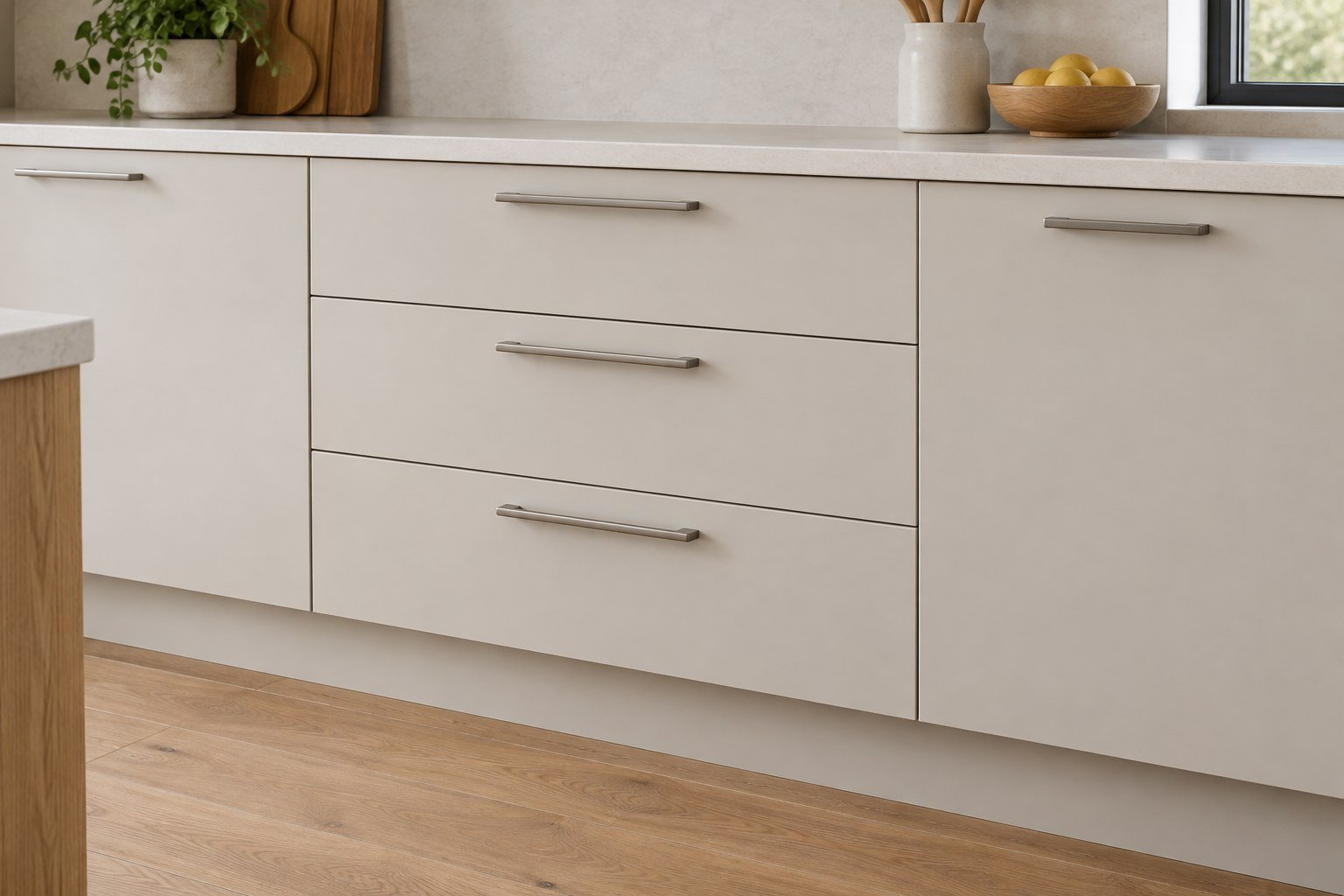
You ask for a change to your cabinetry design and receive a revised quote. Before deciding whether the new total suits you, compare the revision with the earlier proposal. Has the requested change been made? Has anything else changed with it? And which items are still undecided?
A total can answer what a proposal costs without explaining how it differs from the last one. Keeping those two questions separate helps you see whether you are comparing the same requirements or choosing a different package.
Table of Contents
Start with one identifiable earlier proposal
Choose the quote and design information you are comparing against. Keep its date or reference together with the relevant drawing and cabinet schedule—the list of units in the design. If the quote refers to a particular drawing revision, use that drawing rather than a newer sketch attached to a different email.
Then identify the revised documents in the same way. A new drawing, an earlier materials list and a revised total may leave you unsure which combination is being priced. Ask the supplier to identify the documents that belong together before treating them as one proposal.
This is especially useful when a conversation has produced several alternatives. A finish discussed as an option is not necessarily the finish used in the latest total. Keep the alternative separate until its place in the proposal is clear.
Separate the requested change from other differences
Write down the change you asked for in plain language. “Simplify the door fronts while keeping the storage arrangement” is a different request from “reduce the cabinetry scope”. That distinction gives you something specific to check against the revision.
Read beyond the line that names the new finish or layout. Look for items that have been replaced, removed, added or left without a clear status. An item missing from the revised description is a question to resolve, rather than proof that it is included or excluded.
Likewise, distinguish an optional item from a selected item, and an allowance from a confirmed price for defined work. Ask what the current total includes and which amounts or requirements remain to be confirmed. You do not need to infer the answer from where an item appears on the page.
For the broader choices behind a cabinetry price, our guide to why kitchen cabinetry quotes vary explains materials, fittings and installation scope. When comparing revisions, the narrower task is to account for what moved between these two versions.
Work through the differences before judging the total
For example, consider a kitchen proposal with drawer storage for cookware and profiled cabinet fronts. You ask for flat fronts instead, while keeping the drawer arrangement. The revised quote has a lower total, but it also shows cupboards where the drawers were and leaves installation unclear.
Set the three differences beside the earlier proposal:
| Item | Earlier proposal | Revised proposal |
|---|---|---|
| Cabinet fronts | Profiled fronts | Flat fronts, as requested |
| Cookware storage | Drawers | Cupboards instead of drawers |
| Installation | Listed in the scope | Status not clear |
The flat fronts reflect the change you requested. The storage difference needs a separate decision: do you want cupboards, or should the revised proposal retain the drawers? The installation line needs clarification before you can compare the scope. A blank description does not tell you whether that work has been removed, priced elsewhere or simply not restated.
In this situation, the lower total does not establish the saving from changing the fronts alone. More than one part of the proposal has moved, and one part is unresolved. Ask for a version that retains the drawers and makes installation explicit, or ask for the alternatives to be identified separately. You can then decide whether the changed appearance, storage arrangement and included work match what you want.
The same reasoning applies if the total rises or stays unchanged. The amount alone does not reveal whether a requirement has been added, an option selected or an allowance left open. Resolve the differences before attributing the price movement to one design choice.
Bring the chosen version back into one package
Once the questions are answered, keep the current quote, drawings, materials and inclusions together. Ask the supplier to identify which earlier alternatives the current proposal replaces and which remain optional. If the documents still disagree, name the item rather than assuming one document takes precedence.
Keep the cabinetry scope distinct from the wider renovation. Silk Touch’s normal joinery offer does not itself establish an all-trades renovation contract; other work is separate unless an individual agreement expressly includes or coordinates it. If a revision changes who is arranging part of the work, make that responsibility visible alongside the price discussion.
To discuss the requirements for your cabinetry project with Silk Touch Joinery, explain the project location, the proposal or design you are working from and the specific change you are considering. That gives the conversation a defined starting point without treating an unresolved option as a settled choice.