
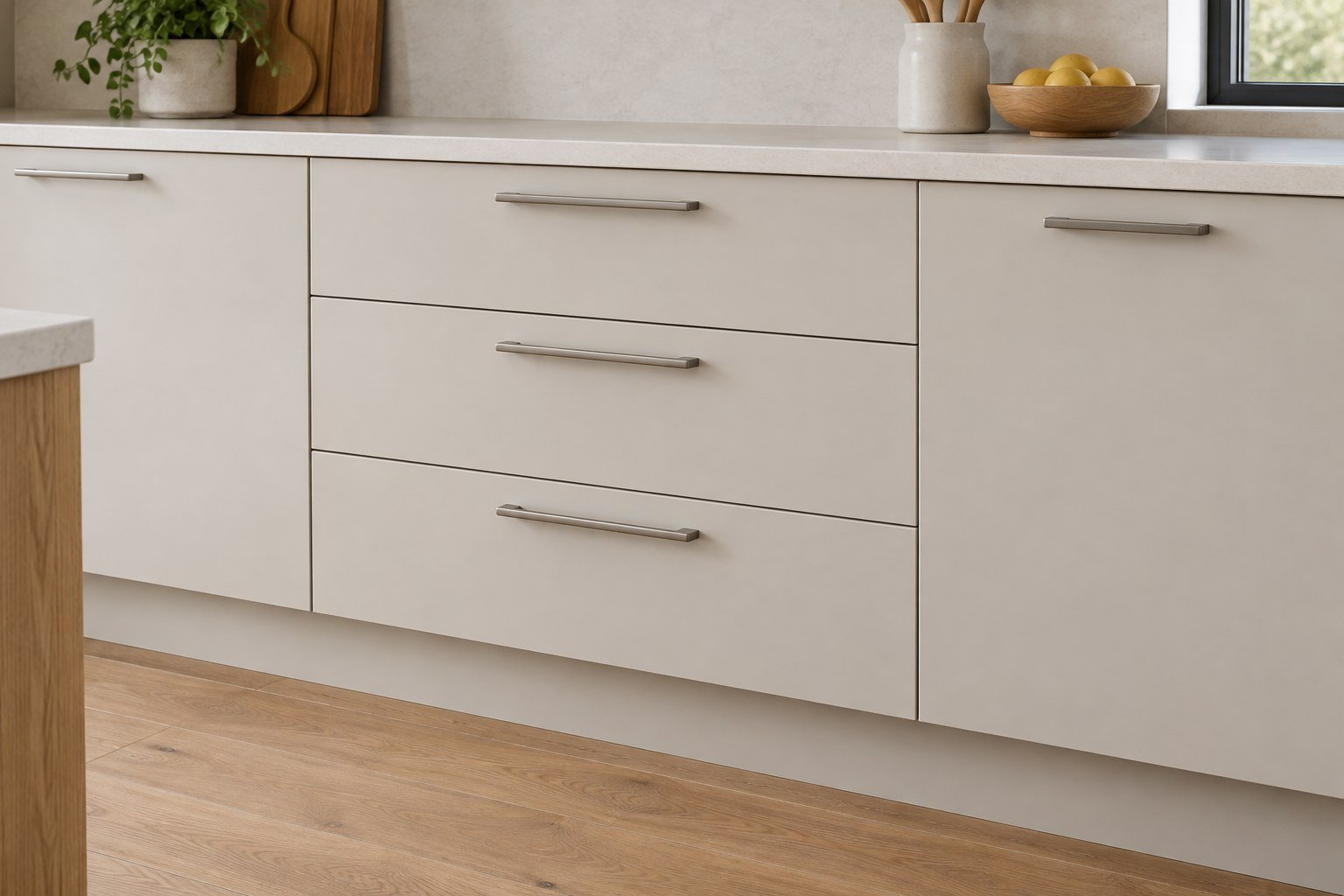
Drawers can suit cookware and tableware you want to bring towards you and view from above. A hinged cupboard may suit a taller item or an occasional serving piece when its opening and shelf arrangement fit. You can combine the two, choosing each cabinet for the things it needs to hold.
The comparison here is between drawers below the benchtop and base cupboards with hinged doors and shelves. Start with those everyday storage choices before deciding how many horizontal drawer lines or full-height doors you want across the kitchen.
Table of Contents
What changes when the storage moves towards you?
Pull out a drawer and its contents move with it. Open a cupboard door and the shelf stays inside the cabinet. That difference matters when you want to see a group of pans or choose a plate without reaching past items at the front of a shelf.
How far the drawer opens also matters. For example, Blum’s Australian TANDEM range includes both full- and single-extension runners. Ask which extension is proposed for your cabinetry rather than assuming every drawer brings its whole interior beyond the cabinet front.
A drawer does not remove the effects of stacking. If a small saucepan sits inside a larger one, you may still need to move the smaller pan to retrieve the one below. Consider the way you group the contents as well as the mechanism that carries them.
Compare drawers and cupboards on the same terms
| What matters to you | Drawers | Hinged cupboards with shelves |
|---|---|---|
| Seeing and reaching contents | The tray comes towards you; the view depends on its extension and how items are arranged. | Shelves stay inside; check whether front items obscure what you want at the back. |
| Tall or bulky cookware | Check clear internal height, width and depth, including space for handles and lids. | A suitable shelf arrangement may provide the taller opening an item needs; check the actual opening too. |
| Opening beside other cabinetry | Check the drawer’s open position against nearby doors, handles and the space where you stand. | Check the door swing and whether you can reach the intended shelf with it open. |
| Appearance across the cabinet run | Horizontal divisions make the drawer arrangement visible on the fronts. | Taller door fronts create a different pattern; the shelves remain concealed behind them. |
An internal drawer behind a cupboard door is another arrangement: the door opens before you pull out the drawer. If that is one of your options, compare those opening steps with a drawer accessed directly from its own front.
Match the contents to the usable opening
Dinner plates, nested saucepans and lids give you different questions to resolve. For plates, consider the size of the stack and where you will stand to take it out. For pans, include the handles in the space you need. Decide whether the lids will sit with the pans or need a separate position.
Compare these items with the proposed cabinet’s clear internal dimensions. The height of a drawer front does not tell you the height available inside it. An insert or divider also belongs in that comparison; choose the arrangement with the actual contents in mind.
A tall stockpot may be a good reason to retain a cupboard with a suitably positioned shelf. But the word “cupboard” does not establish fit. Check the opening and the space needed to lift the pot out, including its handles and lid. A drawer with enough clear internal height, width and depth might accommodate the same pot, so compare the two proposed interiors before deciding.
Frequency helps set the priority. You may value a clear view of pans used every evening more than having the same access arrangement for a serving dish brought out occasionally. An occasional item still needs a practical way in and out; it simply need not determine the whole cabinet run.
A mixed layout for everyday and occasional items
For example, consider a household choosing storage for everyday plates, three nested saucepans, one tall stockpot and a large serving bowl. They want to see the plates and pans when the storage is open, while the stockpot and serving bowl are used less often.
Their first option could put the plates and saucepans in separate, suitably sized drawers. A neighbouring cupboard could hold the stockpot and serving bowl if its shelf arrangement leaves the openings each needs. The reason for the mix is clear: the drawers serve the frequently retrieved groups, while the cupboard accommodates the taller or occasional pieces.
Now suppose the proposed stockpot drawer has enough clear space for the pot and its lid. That makes it a genuine alternative to the cupboard. The household can compare retrieving the pot from each option, rather than keeping a cupboard solely because tall cookware is assumed to belong behind a door. They might retain the cupboard for the serving bowl, choose a different drawer arrangement, or alter the split once the actual dimensions are compared.
Settle the balance before choosing the fronts
Look at the cabinet run as a whole once the contents have a place. A bank of horizontal drawer fronts and a pair of taller cupboard doors create different visual rhythms. You can prefer either look while still testing whether the storage behind it works for your cookware and tableware.
When comparing proposals, identify the actual drawer configuration, shelf arrangement and hardware included in each. A different number of drawers or a different runner is a different specification; the labels alone do not tell you what is being offered.
For custom kitchen cabinetry in Melbourne, bring the items that are hardest to accommodate into the design discussion. Share your suburb, any plans or dimensions you have, and whether your priority is a clearer view of everyday contents or a particular opening for bulky pieces.
Discuss your kitchen cabinetry project with Silk Touch Joinery to explore a drawer-and-cupboard balance around those requirements.