
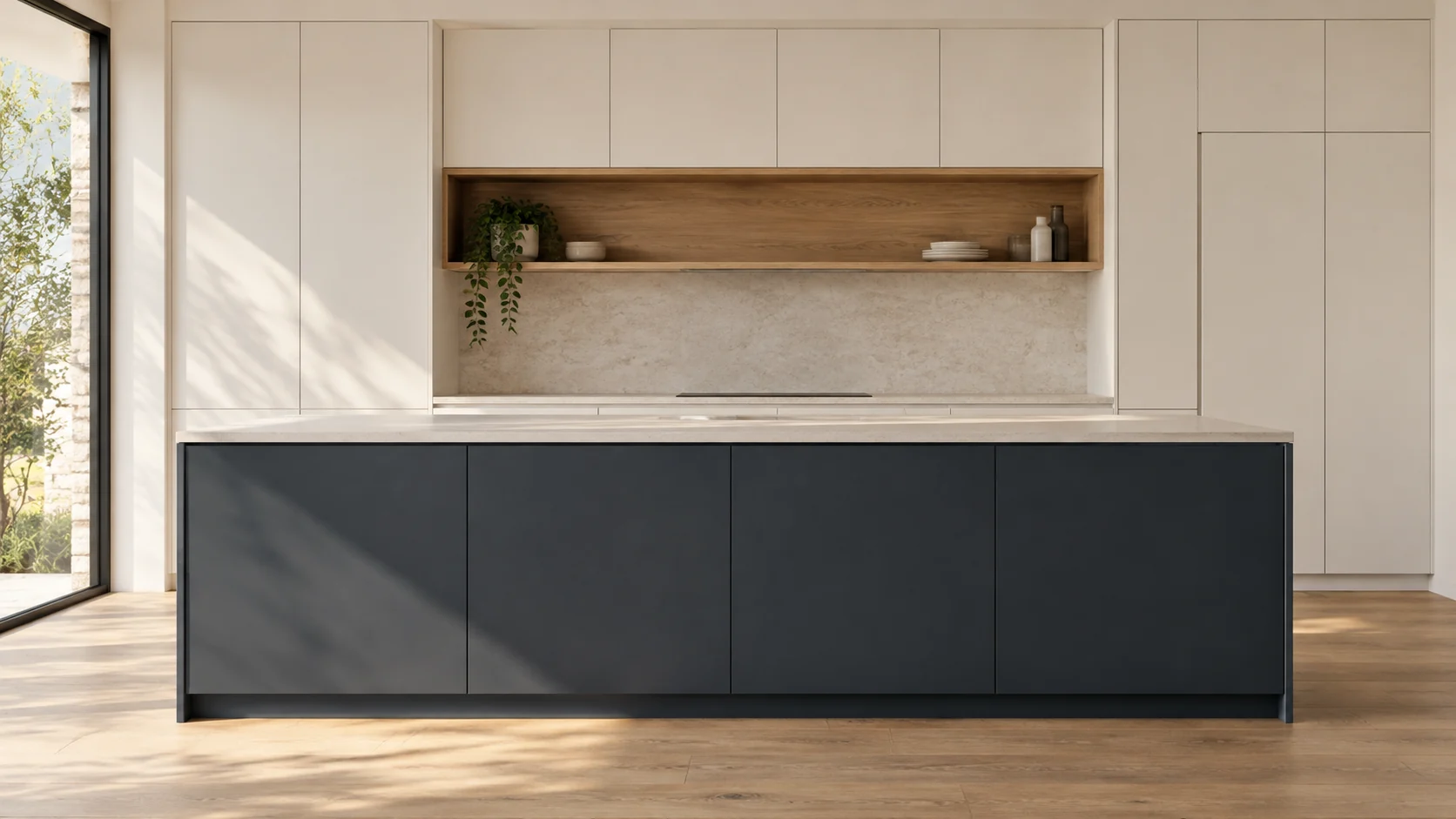
Once you have a shortlist of kitchen cabinetry finishes, give each proposed choice a clear identity and location. Keep one current record showing the actual sample, where you want to use it and what still needs discussion. A note such as “warm white matt” describes a preference; it leaves the product and its placement open.
This record helps you prepare for a cabinetry discussion during your kitchen renovation. Use it alongside the plans and selection documents agreed with your joiner.
Table of Contents
Identify the sample beyond its colour name
Copy the wording from the sample label or its product reference. Keep the manufacturer’s named finish separate from your description of how it looks. “Soft-looking white” may explain what appeals to you, while the product and finish names identify the option you are discussing.
- Manufacturer and product or range.
- Colour name and code, where supplied.
- Named finish, with sheen or texture notes that matter to your choice.
- A sample identifier or labelled reference you can find again.
If a detail is missing, mark it as a question rather than guessing. For example, polytec’s sample guidance says exact colour matches across its product ranges are not guaranteed. Record the particular product being considered instead of relying on the colour name alone.
Map finishes to the parts you will see
Give each cabinetry zone its own entry: base cupboards, overheads, tall cabinetry and the island, as relevant to your design. Be specific when different faces have different proposed finishes. “Dark island” could leave its kitchen-facing doors and room-facing panel unclear.
Use a labelled plan or a short written list to connect each choice to its position. Ask your joiner which visible end panels, edges, plinths or other details need a separate entry. Record your preferred door profile—the shape of the cabinet front—and leave unresolved edge details visible for discussion.
Compare the proposed combination
Place the shortlisted samples together, alongside any benchtop, splashback and flooring references you already have. View them in the room where practical and note the relationship you prefer. Perhaps you want the island to stand out against pale wall cabinetry, or the timber tone to connect with an adjoining living area.
Keep reference images for the look you like, and identify the actual sample separately. A labelled photo can help you recall the combination you considered; keep the product details with it so the photo does not become the only record of your choice.
Make the open decisions easy to find
For example, consider a kitchen with pale perimeter cupboards and a charcoal island. You may have chosen a sample for the perimeter doors but still be comparing island finishes. Give the perimeter doors their exact sample and product details. Keep the island doors and outer panel as separate proposed choices until their relationship is settled.
An open question could read: “Should the island’s outer panel use the same product and finish as its doors? Confirm the proposed pairing with the joiner.” This is more useful than marking the whole island as selected when one visible part is still undecided.
Use clear status notes such as shortlisted, proposed or confirmed with the project team, following the language used for your project. Keep a homeowner preference distinct from a selection that has been confirmed in the agreed project documents.
Date the record when a choice changes
Put a date or version on the current record. When you replace a choice, identify the zone and the detail that changed, then mark the earlier note as superseded. That makes it easier to distinguish the current proposal from an old sample photo or email attachment.
Keep a short open-items list with the question, who you need to ask and the next action. Ask how confirmed selections will be reflected in the project documents before any ordering or manufacture is authorised. Your planning record supports that conversation; the agreed project process determines the next step.
Bring a clear record to the cabinetry discussion
When discussing custom kitchen cabinetry in Melbourne, bring the current finish record, the samples or labelled references, and any plans you have. Include your project suburb and the choices you want help resolving.
Discuss your kitchen cabinetry project with Silk Touch Joinery and share the finish details and open questions you have gathered.