
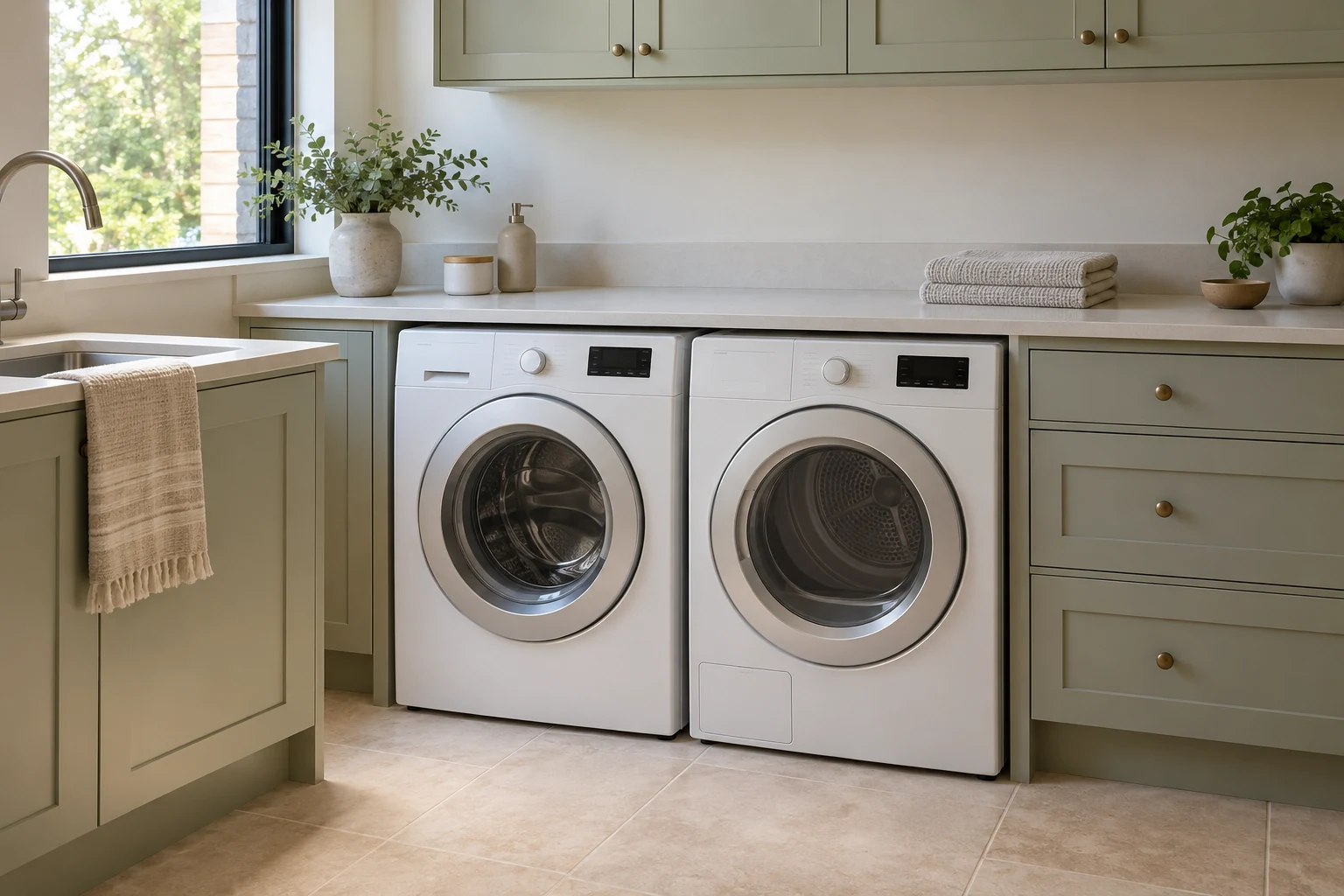
A stacked washer and dryer may leave room beside them for a bench or cabinet. Side-by-side machines may allow a bench above both, with each appliance door closer to floor level. The better arrangement depends on what that space needs to do, whether you can comfortably reach the doors and controls, and the requirements of the exact appliances you choose.
Start with the machines and the room together. A layout that looks compact on a plan can still leave you without a useful folding surface or put the dryer controls beyond a comfortable reach.
Table of Contents
Decide what you want the arrangement to make possible
Before choosing a stack, name the use for the space beside it. Perhaps you want a clear bench for folding, or a tall cabinet for items that do not fit beneath a benchtop. Then locate that feature on the actual plan. Freed width only helps if it is in a position you can use.
With side-by-side appliances, consider the proposed bench as part of the whole room. Where suitable machines and their installation requirements allow a benchtop above them, that surface may provide useful working space. Its value depends on its position and what else needs to occupy it. Side-by-side machines do not necessarily rule out a tall cabinet elsewhere.
For example, consider a laundry that already has enough tall storage but no clear place to fold. A stack would be worth comparing if the space beside it could become a usable bench. If that space is needed for something else, stacking alone would not resolve the missing work surface.
Compare both layouts against the same needs
Use the same room and appliance choices for this comparison. Two photographs of different laundries can make one arrangement look more generous without showing what either would provide in your home.
| Planning question | Stacked washer and dryer | Side-by-side washer and dryer |
|---|---|---|
| Where could a bench go? | It may fit beside the stack if the remaining space and appliance requirements allow it. | It may extend above suitable machines, subject to their installation requirements. |
| What happens to cabinet space? | The stack uses vertical space above the washer and may leave adjacent width for cabinetry. | Both machines occupy more of the horizontal run; assess the remaining wall and floor space for cabinets. |
| How will you reach the appliances? | Check the higher dryer door and controls against your own reach. | Check access to both lower doors and the position of each machine’s controls. |
| What must be confirmed first? | The exact compatible appliance pair, any required manufacturer-approved stacking kit and installation instructions. | Each machine’s installation requirements and whether the proposed bench and cabinetry arrangement accommodates them. |
Neither arrangement is automatically the right choice for a small laundry. Compare the working space and access each would leave in the particular room.
Check the doors, controls and bench together
Look beyond the closed appliance fronts. On each proposed layout, consider where you would stand with the doors open and whether you could reach the controls and the bench you intend to use. Include any surrounding cabinet doors in that check.
A stacked dryer deserves particular attention here. Confirm that you can comfortably see and use its actual controls and reach into the drum. A photograph or cabinet elevation cannot establish that for you. Side-by-side machines also need a practical check: lower doors may be easy to see on a drawing while the space in front of them remains awkward to use.
These observations help explain your preferences to the designer. They do not replace confirmation of the appliances’ installation and access requirements.
Confirm the exact models before finalising the cabinetry
Keep the washer and dryer model details with your plans, whether you are retaining existing machines or choosing replacements. Do not assume that matching brands make a pair stackable. Bosch Australia’s WTZ27500 stacking-kit page, for instance, asks buyers to check compatibility with their dryer before ordering.
Ask the appropriate appliance supplier or installer to confirm the pair, any required manufacturer-approved stacking kit and the current installation instructions. The cabinetry design also needs the relevant clearance, ventilation, connection and removal requirements confirmed for those models. A general cabinet opening or an appealing enclosure is not evidence that a particular machine will fit and operate as required.
If you may replace a machine later, discuss what a different model could mean for the cabinetry. Leaving that question open is more useful than assuming every future washer or dryer will be interchangeable.
Bring a clear priority to the cabinetry discussion
You do not need to arrive with every cabinet decided. Bring the room plan, the appliance model details you have and a clear priority: a usable folding bench, a particular storage need or comfortable access to both machines. That gives the comparison a purpose when discussing custom laundry cabinetry.
Keep appliance supply, plumbing and electrical work separate from the cabinetry scope unless your individual agreement includes them.
Discuss your laundry cabinetry project with Silk Touch Joinery. Share your project location, any plans you have and the appliance arrangement you are considering.