
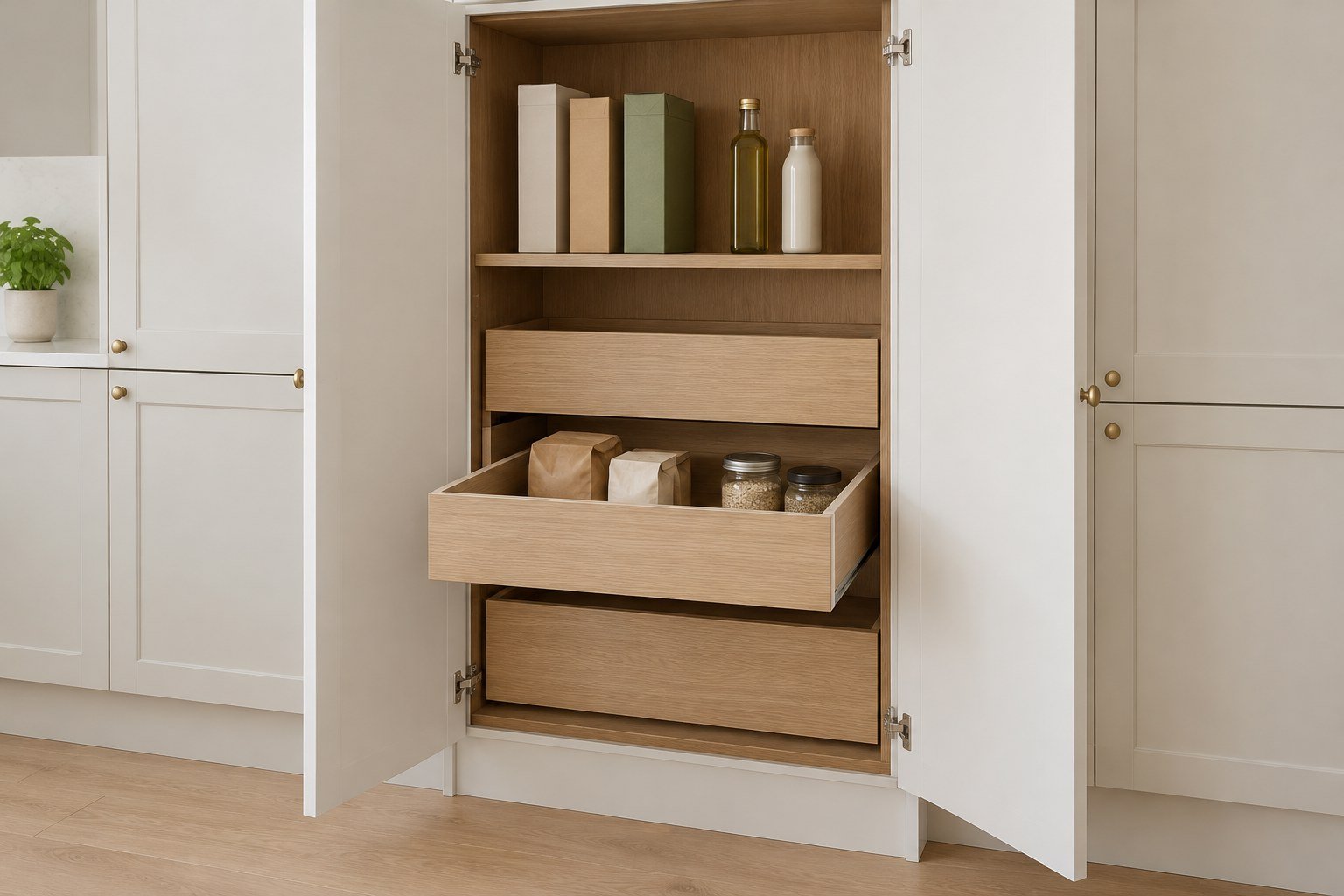
Pantry shelves can work well when you can see and reach the food you store. Internal drawers can bring items forward from a deeper cabinet, but their usefulness depends on the drawer height, usable space and how the cupboard doors open. A tall pantry does not need the same arrangement at every level.
For a kitchen renovation, start with the packages you actually buy. A tall cereal box, a row of spice jars and spare packets of pasta present different storage problems. Comparing them against the proposed cabinet is more useful than choosing an all-shelf or all-drawer pantry from a photograph.
Table of Contents
What counts as an internal pantry drawer?
An internal drawer sits behind the pantry cupboard doors. You open the doors, then slide out the drawer you need. Each drawer moves separately, so you can leave the others closed.
A whole pull-out larder is a different arrangement: its storage moves out together with the front. The choice here is between shelves and individual internal drawers within a tall food-storage cabinet.
When looking at a proposed drawer, check how far it extends. A full-extension drawer brings its contents forward; a drawer that stops partly inside the cabinet offers a different view and reach. The word “pull-out” alone does not explain the usable opening.
Compare shelves and drawers against your food storage
| What you need to check | Pantry shelves | Internal drawers |
|---|---|---|
| Seeing smaller packets | Items can be easy to identify on a shallow, visible shelf. Taller goods at the front may hide those behind. | Bringing a drawer forward can reveal smaller packets. High drawer sides or a drawer mounted above your view can still obscure them. |
| Storing tall bottles and boxes | Check the clear height above the shelf and the route for lifting an item out. | Check the space above the drawer, its sides and the opening needed to remove the package. |
| Taking out one item | Open the cupboard door and reach directly to the shelf. Rear items may require moving those in front. | Open the cupboard door, extend the selected drawer and take the item. The door must clear the drawer’s path. |
| Comparing usable space | Check the actual shelf depth and height, rather than the cabinet’s outside dimensions. | Check the drawer’s usable interior after allowing for its sides and fittings, rather than assuming it matches the cabinet width. |
Neither option makes a deep cabinet automatically easy to use. The question is whether you can identify, take out and put back the food intended for that particular level.
Where shelves can be the better choice
A shelf is worth keeping when its contents are already visible and comfortably reachable. If your usual cereal boxes fit upright and you can take one out without rearranging the others, an additional sliding movement may offer little benefit.
Shelves also deserve consideration near the top of a tall cabinet. Being able to pull a drawer out does not mean you can see into it from above. In its SPACE TOWER planning guidance, Blum Australia shows a shelf at the highest level with an internal drawer below, and pull-outs at different levels for tall packages. It is one manufacturer’s arrangement to discuss; the doors, fittings and package sizes in your proposal still need checking.
Check what you can actually see and reach at each proposed level. A shelf hidden above your comfortable reach is not made practical simply by calling it occasional storage.
Where internal drawers earn their place
Internal drawers are worth considering where food sits behind other food on a deep shelf. For example, bringing a lower drawer forward may make it easier to choose a packet from a group of rice, pasta and baking ingredients. That benefit relies on the drawer opening far enough and the contents remaining visible when it is extended.
Try the intended movement when viewing a sample cabinet or discussing the design. Check that the cupboard door clears the drawer’s path and that you can lift a tall bottle past the level above. Try reaching the contents with the other drawers closed. Ask the designer to confirm these details for the actual doors, hinges and drawer system.
Choose a mixture around what you actually store
For example, consider a household that keeps everyday cereal in tall boxes, smaller cooking ingredients in packets and spare supplies behind them. A visible shelf might suit the cereal. An internal drawer lower down could bring the smaller packets forward. The spare supplies need their own usable position, rather than being assigned to whatever space remains.
Take a short list of those items into the cabinetry discussion, including any bottles or containers that are awkward to store now. Ask to see which level each group would use and the clear opening available there. If a shelf already solves the problem, keep that option open. If access to the back is the difficulty, compare it with a suitably configured internal drawer.
Plan these pantry choices alongside the rest of your custom kitchen cabinetry. To discuss it with Silk Touch Joinery, send an enquiry about your kitchen cabinetry project with your project location, any plans and the food-storage problems you want to address.