
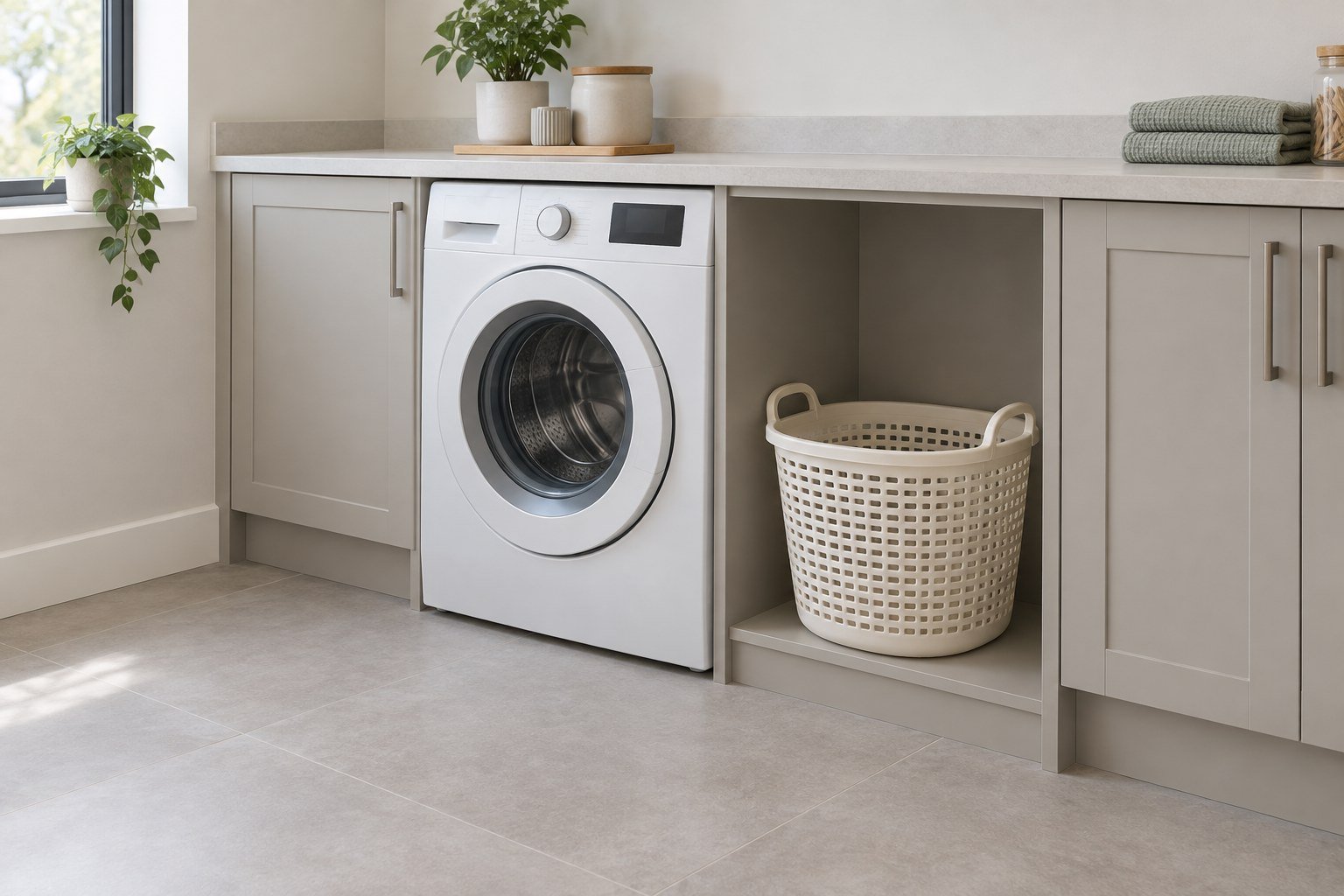
Plan laundry basket storage by following a basket through a wash, including the trip back out of the room. A concealed hamper may appeal to you, but where will you put the basket while loading the machine? Where will it wait when the clean clothes are ready, and where does it belong once they have been put away?
Answer those questions before choosing the cabinet mechanism. You may want one removable basket to travel between rooms, a sorting position that stays in the laundry, or separate baskets for collecting and returning clothes. The useful choice depends on which parts of that routine you want the cabinetry to support.
Table of Contents
Follow the basket beyond its storage position
Start where you collect the washing. If a basket comes from a bedroom, consider whether you want to carry that same basket into the laundry and back again. If clothes are collected in the laundry, consider how you want to transfer them from their storage position to the machine.
Then follow the empty basket. It might return to its usual room immediately, stay nearby for unloading, or have a separate resting place until needed. A cabinet designed only around a full basket can leave this part of the routine unresolved.
Note what you would prefer to happen as well as what happens now. Putting a basket on the floor because there is nowhere else to put it is a starting problem to discuss, rather than a requirement to build into the new layout.
Separate a travelling basket from a sorting station
A removable basket and a fixed sorting position do different jobs. If you want to carry the container between rooms, its removal and return belong in the brief. If you want sorting to stay in the laundry, decide how you would move each load from that position to the machine.
Concealed storage can give the room a quieter appearance when closed. That preference still needs to work with the way you want to use it. If you expect to remove a basket for every wash, discuss access to the basket itself, rather than choosing a cupboard or pull-out solely for its closed appearance.
Give clean clothes a return route
The place where washing arrives need not be the place where clean clothes wait to leave. Consider whether you put clothes away immediately, fold them in the laundry, or take them to another room first. Each preference gives the basket a different role.
If you want separate return baskets, give them a place in the discussion too. Where would they wait before use, and would they stay in the laundry after the clothes have been put away? This avoids treating every basket as part of the incoming washing pile.
Test the moment when two uses compete
For example, consider bringing a full basket into the laundry while an empty return basket is already waiting there. Your first idea is a concealed basket cupboard beside the machine, but you have also pictured placing the full basket in front of that cupboard while loading.
Walk through what you would want to open and reach at that moment. Would the cupboard need to be open as well? Would you move the return basket first? If you do not want that extra move, reconsider where either basket waits before settling on the cabinet arrangement.
That does not establish that a proposed cabinet, machine or basket will fit. It identifies the competing uses that the layout needs to accommodate. Actual dimensions, appliance requirements, openings and access still need assessment for the proposed room.
Bring the basket and the unresolved choice
If you want to keep a particular basket, bring its dimensions, with a photo if helpful. Explain where it comes from, where you want it to wait during loading and where it goes afterwards. If the basket has not been chosen, keep that decision open.
Finish with the conflict that matters most to you. “I want the return baskets to wait here without having to move them to reach the washing” gives the cabinetry discussion a clearer priority than “add more hamper storage”. The cabinet type can then be considered against that priority and the actual room.
For a Melbourne project, discuss your laundry cabinetry requirements with Silk Touch Joinery. Share your project suburb, available plans or photos and the basket routine you want to support. Plumbing, electrical and other renovation work are separate unless included or coordinated in your individual agreement.