
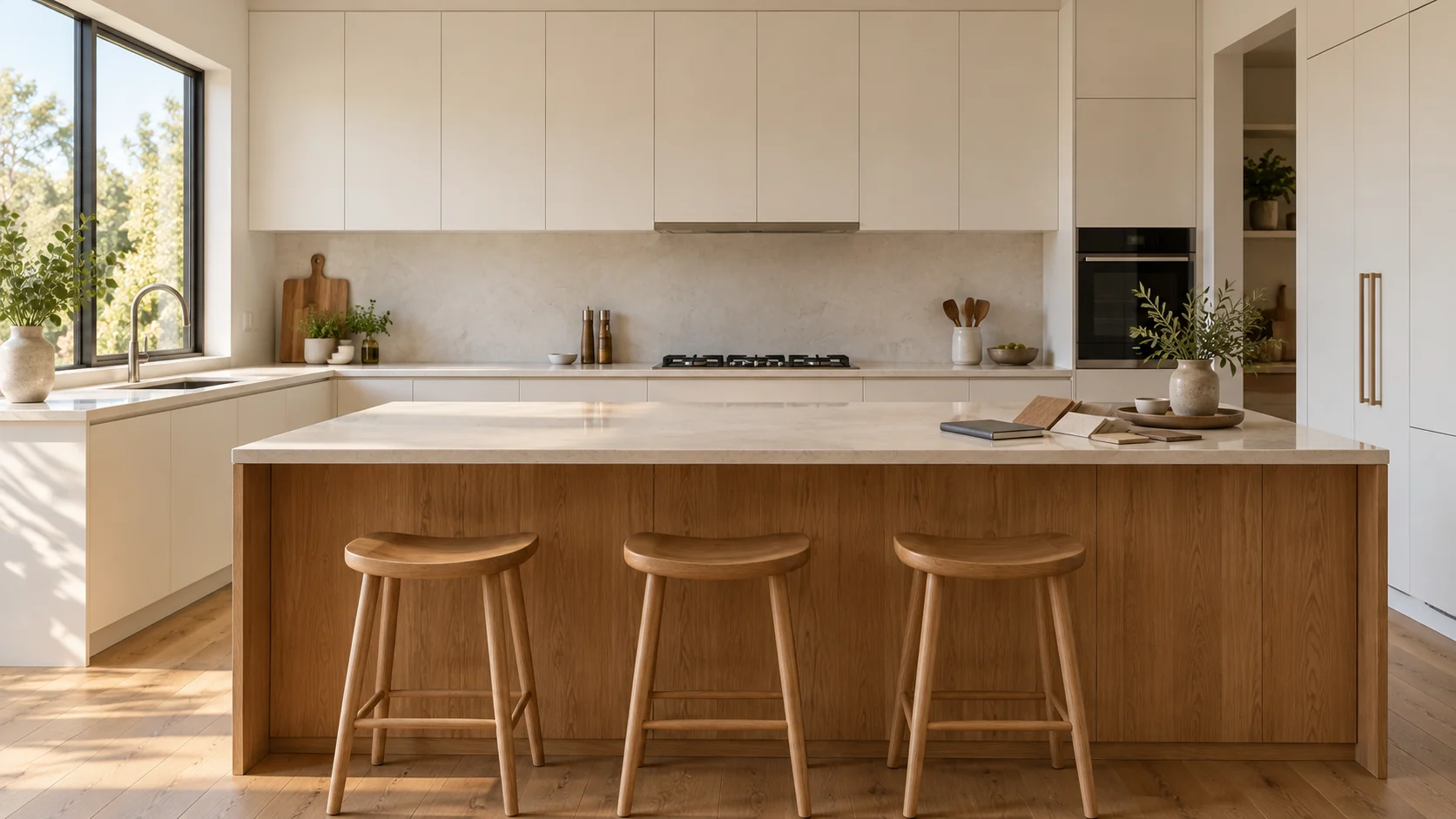
Kitchen island storage is worth planning around what you want to retrieve, not just how many cupboards you could add. A bowl used during preparation and a table mat needed while someone is sitting at the island may call for different locations—even if both would fit on your initial wish list.
Start with the contents and the moment of use. Then consider which face of the proposed island you would approach: the working side towards the main cooking and preparation area, the room-facing side towards the adjoining room or seating, or a short end. These are ways to describe your preferences, not a verdict that storage will suit every face.
Table of Contents
Give the working side a specific job
If you expect to prepare food at the island, think about the items you would reach for while standing there. Your mixing bowls and everyday preparation utensils might be candidates for that side. A baking tray used mainly at another bench deserves a separate decision; it need not move to the island simply because it is kitchen equipment.
Consider putting things away as well as taking them out. Where would you be holding the clean bowls, and which direction would you approach? If the answer differs from the place you use them, identify which part of the routine matters more to you. That gives the cabinetry discussion a useful priority rather than an undifferentiated list of contents.
Separate room-side access from seating
Table mats, napkins or serving dishes might be worth considering on the room-facing side if you want to retrieve them from a nearby dining area. But “used at the table” does not automatically mean “stored behind a stool”. Ask what happens when that seat is occupied and someone wants the contents.
A cupboard needed throughout a meal presents a different question from storage opened only occasionally. If keeping the seat in use is your priority, you might prefer to locate frequently retrieved items elsewhere. Or you might reconsider the proposed seating position. The useful decision is which use takes priority; the actual opening, fit and seating arrangement still need assessment in the proposed layout.
Let an end earn its place
An island end is another possible location, not spare space that must become storage. A cookbook you consult while preparing food might belong there if that is the direction you want to approach. An occasional serving bowl raises a different question: would you want to retrieve it from that end, or would another cabinet suit its use?
Consider what else you want to happen beside the end before choosing an open shelf or cupboard. Leaving it without storage is a valid option to discuss. You do not need to assign contents to every face to have a clear idea of what the island should do.
Test the allocation during one shared moment
Imagine you are preparing dinner at the island, another person is setting a nearby table and a guest is sitting on the room-facing side. Your first idea is to keep preparation bowls on the working side, table mats behind the guest’s seat and occasional serving dishes at the end.
The bowls match the preparation task, but retrieving the mats now conflicts with your wish to leave the guest seated. Instead of accepting the first allocation, consider moving the mats to another proposed storage position that does not compete with that seat. The serving dishes can then be considered separately: are they taken out before guests arrive, or needed repeatedly during dinner?
You have not solved the cabinet geometry, but you have changed the brief for a reason. “I want to reach the table mats while this seat is occupied” is more useful than “I want cupboards on both sides”. Walk through a moment that matters in your own household rather than adopting this particular arrangement.
Bring the unresolved conflict into the discussion
Bring a few priority items, your preferred access direction and any competing use into your cabinetry discussion. The proposed layout then needs assessment for actual fit, openings and seating; a contents plan is not a cabinet specification.
For a Melbourne kitchen project, discuss your cabinetry requirements with Silk Touch Joinery. Keep the cabinetry scope clear: other renovation trades and services are separate unless included in your individual agreement.